
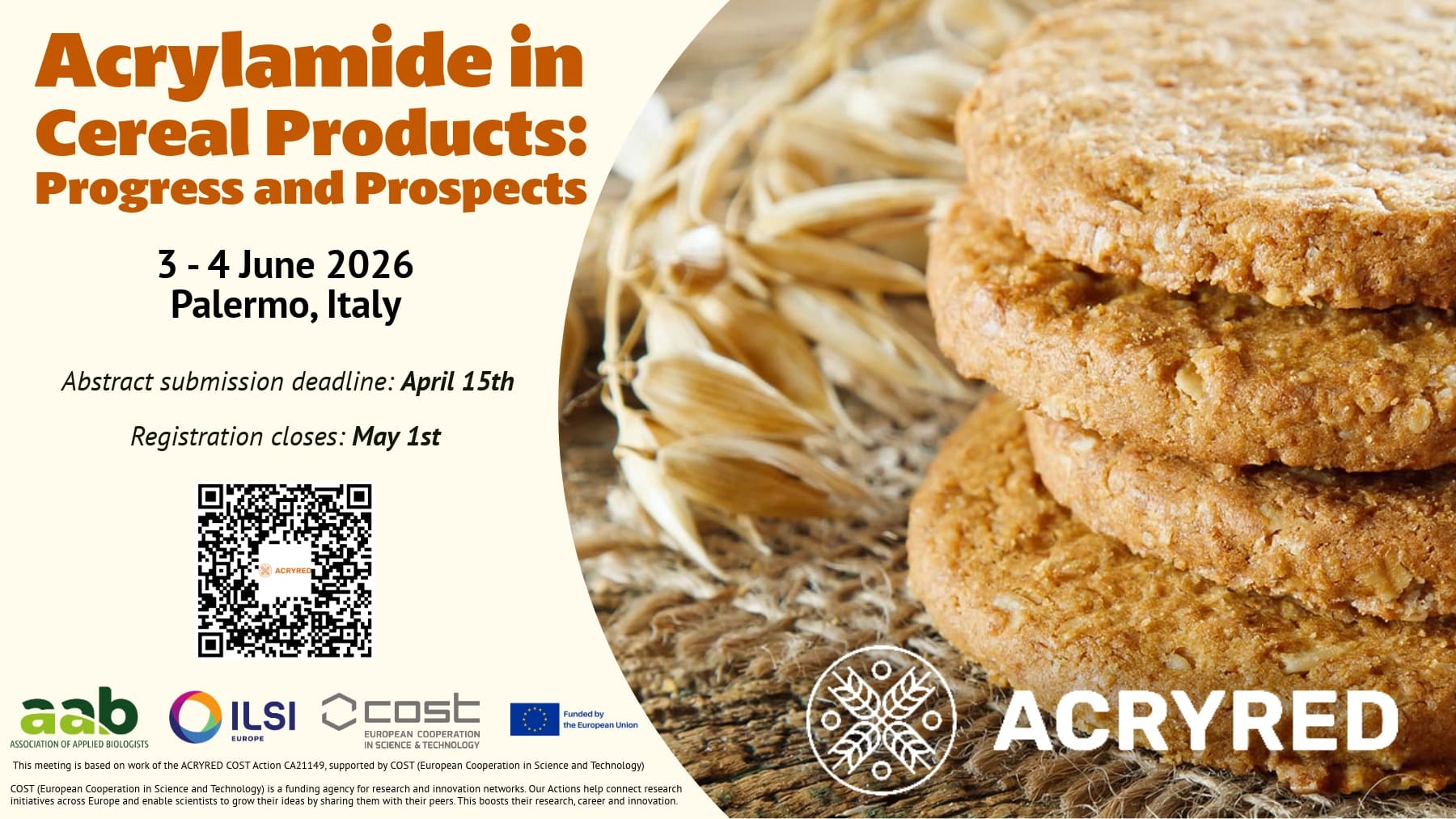
3 June 2026 – 4 June 2026
Palermo – Splendid Hotel la Torre
Acrylamide is a toxic processing contaminant that forms during both industrial food processing and home cooking. It is classed as a probable human carcinogen and can affect the nervous system and fertility at high doses. Baked cereal products are a major source of exposure for consumers, along with fried and roasted potatoes, including crisps (chips) and French fries, and coffee. The current EU Regulation on acrylamide (Regulation (EU) 2017/2158) requires all food businesses to monitor the levels of acrylamide in their products, sets out compulsory mitigation measures and establishes Benchmark Levels for a range of food types. This year, the European Commission is expected go further with the setting of Maximum Levels, above which it would be illegal to sell a product, increasing the pressure on food businesses and potentially threatening the availability of some foods.
Acrylamide forms from free (soluble, non-protein) asparagine and reducing sugars (principally glucose, fructose and maltose) during frying, baking, roasting and toasting. For years, the whole cereal supply chain has been engaged in reducing acrylamide formation in cereal products, developing genetic and agricultural solutions, optimising processes, implementing quality control measures and establishing guidelines. The progress that has been made and the prospects for further improvement will be covered in this conference.
COST Action 21149 ACRYRED is organizing its second conference, to which we have invited several experts, and we encourage abstract submissions for oral or poster presentations, particularly from early career professionals and PhD students. The conference is co-organised with the Association of Applied Biologists AAB.
Link to conference website: https://web.cvent.com/event/3d1c81c9-8673-4356-8f82-de5ccb4d7885/summary?environment=P2
Abstract submission by 15th April.